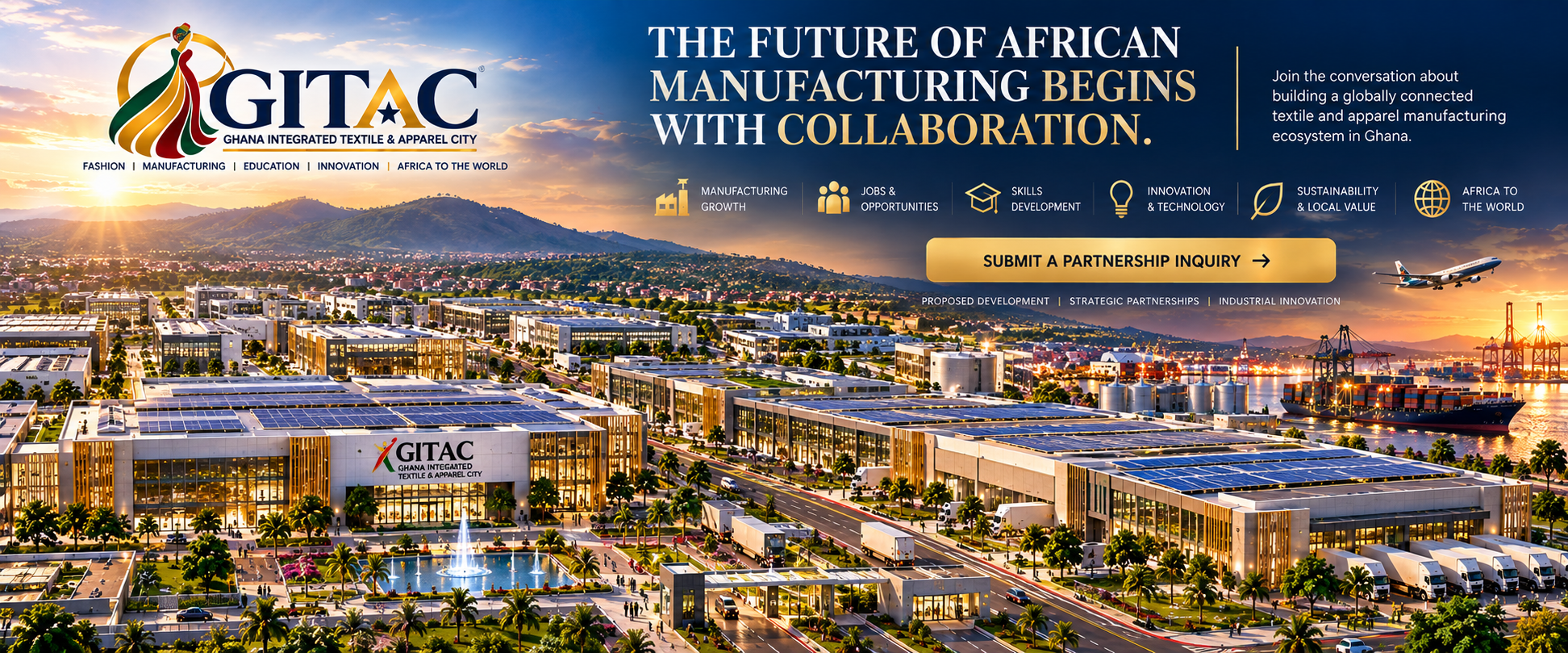
Building the Future of Textile & Apparel Manufacturing in Ghana
An integrated vision for manufacturing, fashion, education and innovation.
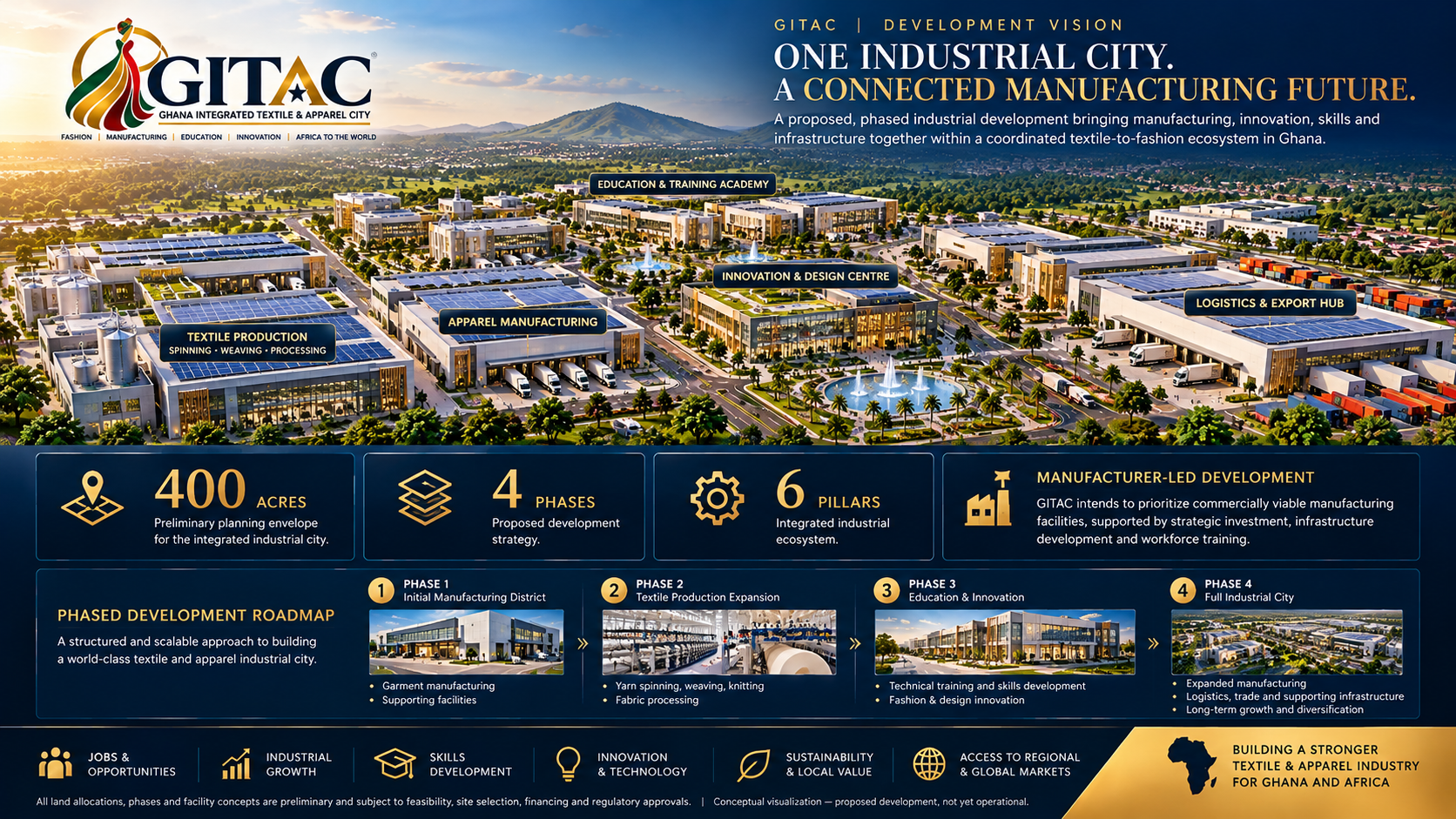
Conceptual Visualization — Proposed Development; Not Yet Operational
A proposed integrated industrial city bringing together textile production, garment manufacturing, fashion innovation, technical education and advanced industrial infrastructure.
Introducing GITAC
An Integrated Vision for Ghana's Textile & Apparel Industry
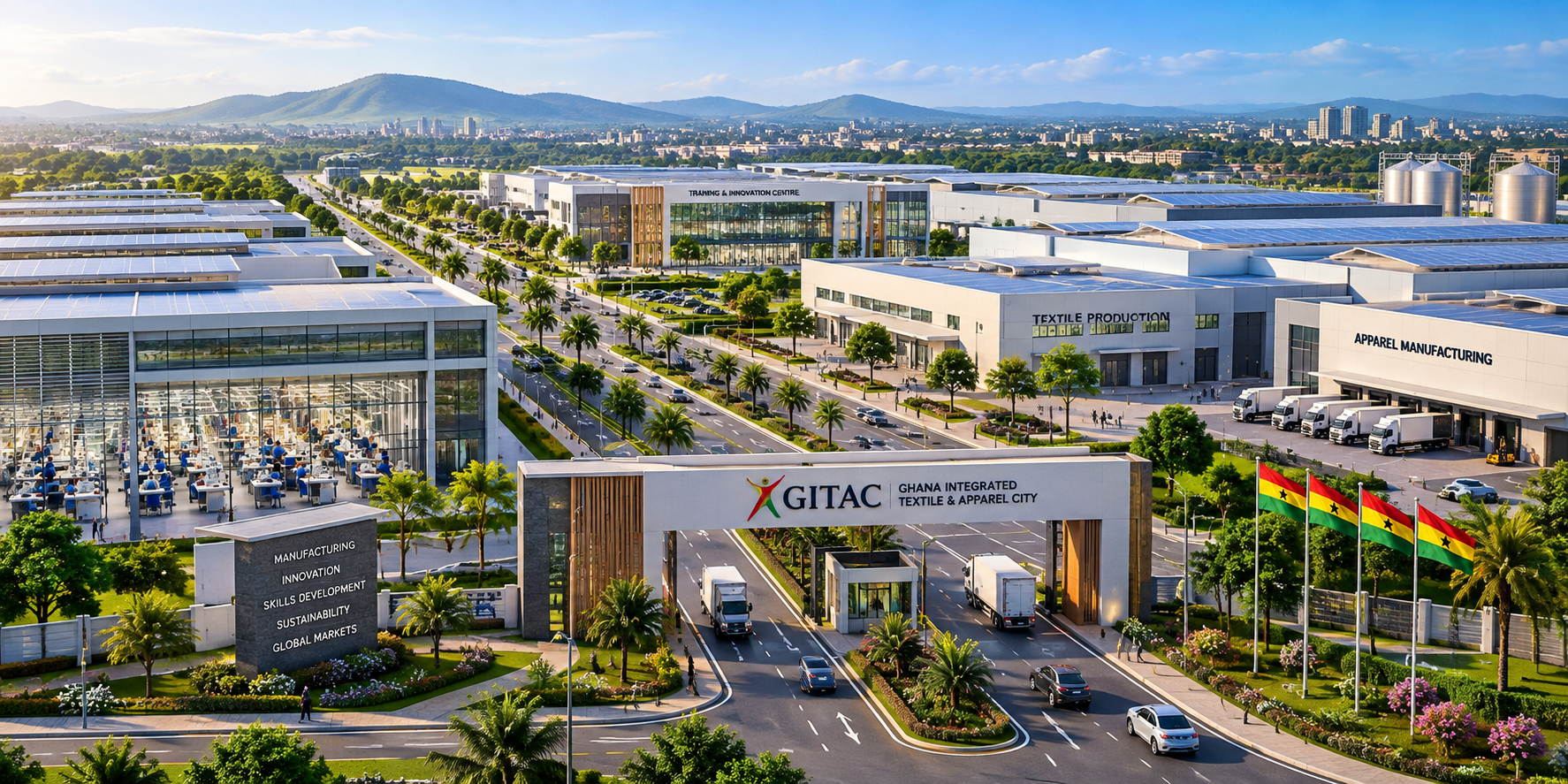
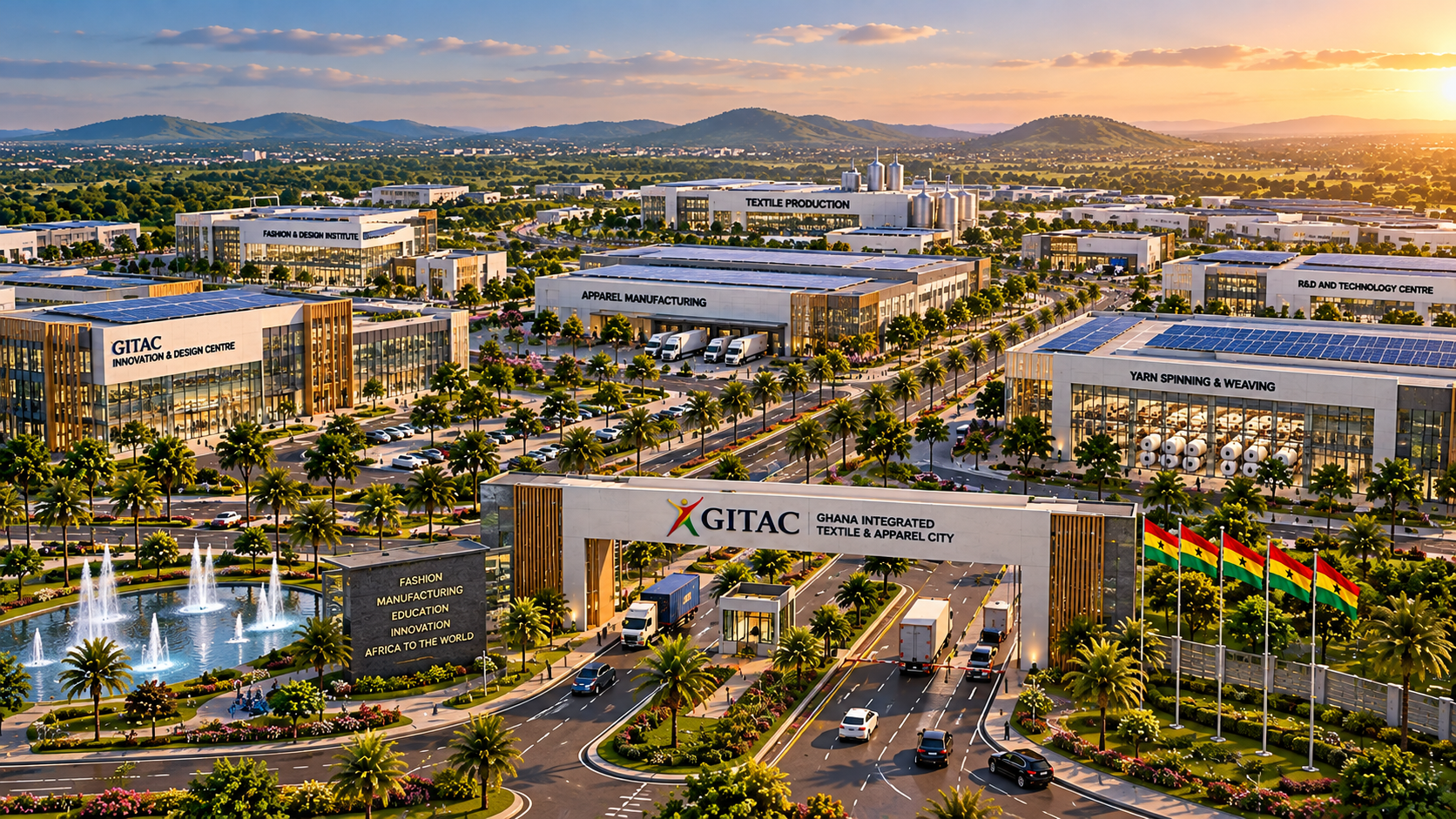
Ghana Integrated Textile & Apparel City (GITAC) is a proposed industrial development designed to bring together the textile and apparel value chain within a coordinated manufacturing ecosystem.
Envisioned for Ghana's Ashanti Region, the project aims to integrate yarn spinning, weaving, knitting, fabric processing, garment manufacturing, fashion design, industrial skills development, and supporting logistics and utilities.
Through phased development and strategic partnerships, GITAC seeks to establish a competitive manufacturing platform capable of supporting local production, employment, technology transfer, and access to regional and international markets.
Our Vision
To help position Ghana as a competitive destination for integrated textile and apparel manufacturing, innovation, and industrial skills development.
One Integrated Industrial Ecosystem
Connecting Every Stage of the Textile-to-Fashion Value Chain
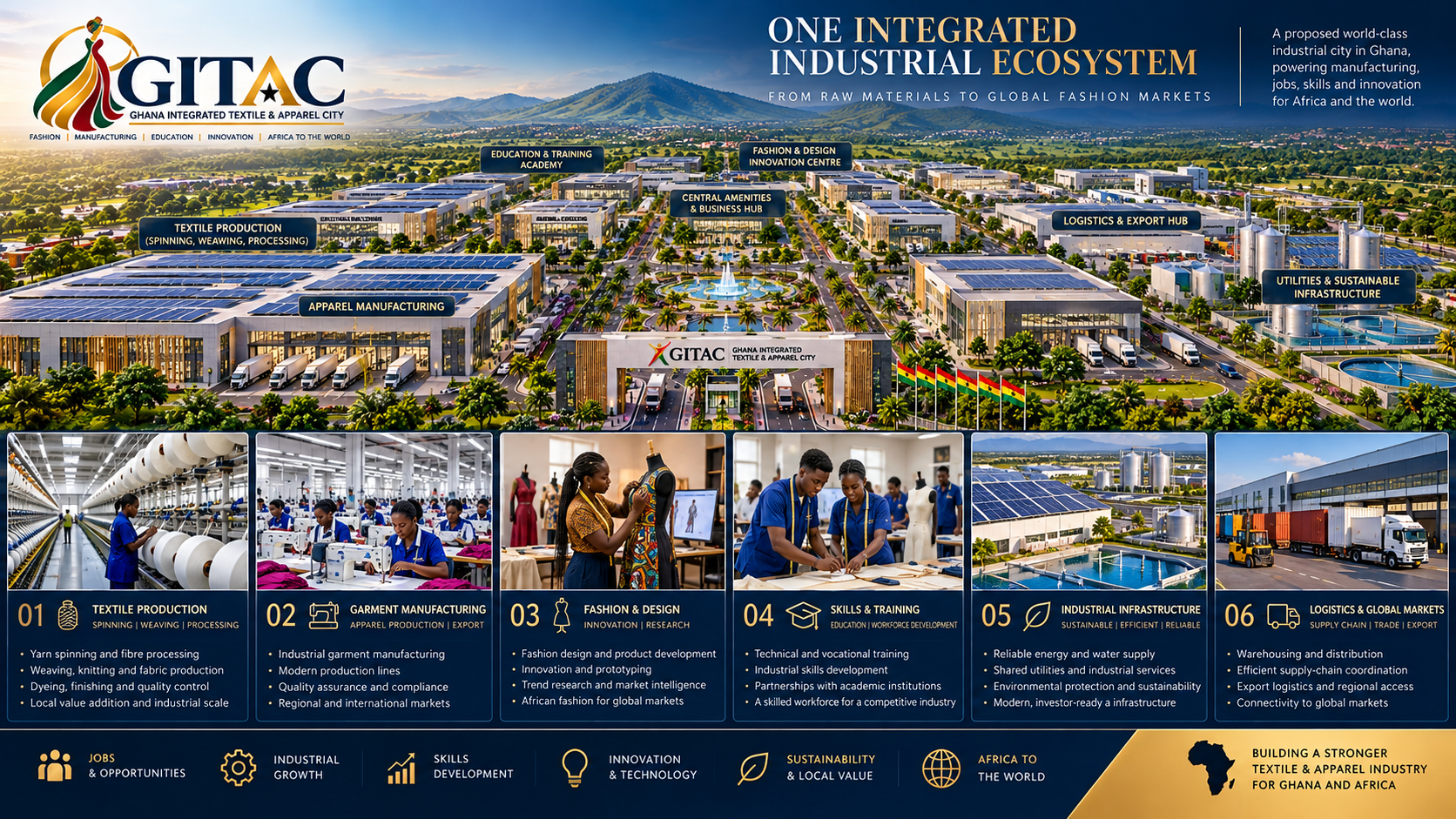
GITAC is envisioned as a coordinated industrial ecosystem integrating six complementary development pillars:
Textile Production — Yarn spinning, weaving, knitting, and fabric processing.
Garment Manufacturing — Apparel production, industrial garment assembly, and export-oriented manufacturing.
Fashion & Design — Creative innovation, product development, fashion design, and research.
Skills & Training — Technical education, vocational training, and workforce development.
Industrial Infrastructure — Shared utilities, energy, water, environmental systems, and industrial services.
Logistics & Global Markets — Warehousing, supply-chain coordination, export logistics, and market access.
Together, these proposed components aim to strengthen local value addition, industrial productivity, skills development, and Ghana's participation in regional and global textile and apparel markets.
Our Development Vision
Building an Integrated Textile-to-Fashion Industrial City
GITAC's preliminary development concept envisions an approximately 400-acre (162-hectare) industrial city in Ghana, structured to accommodate textile manufacturing, apparel production, fashion innovation, technical education, logistics and supporting industrial infrastructure.
The proposed development strategy comprises four progressive phases, beginning with an initial garment manufacturing district and expanding toward a more comprehensive textile-to-fashion value chain.
By aligning industrial infrastructure with manufacturer participation, commercial demand and strategic financing, GITAC aims to establish a scalable platform for manufacturing investment and industrial skills development.
The proposed development area and implementation strategy remain subject to site selection, technical and financial feasibility, environmental assessments and applicable regulatory approvals.
Why Ghana? Why GITAC?
Connecting Ghana's Industrial Potential with Global Manufacturing Expertise
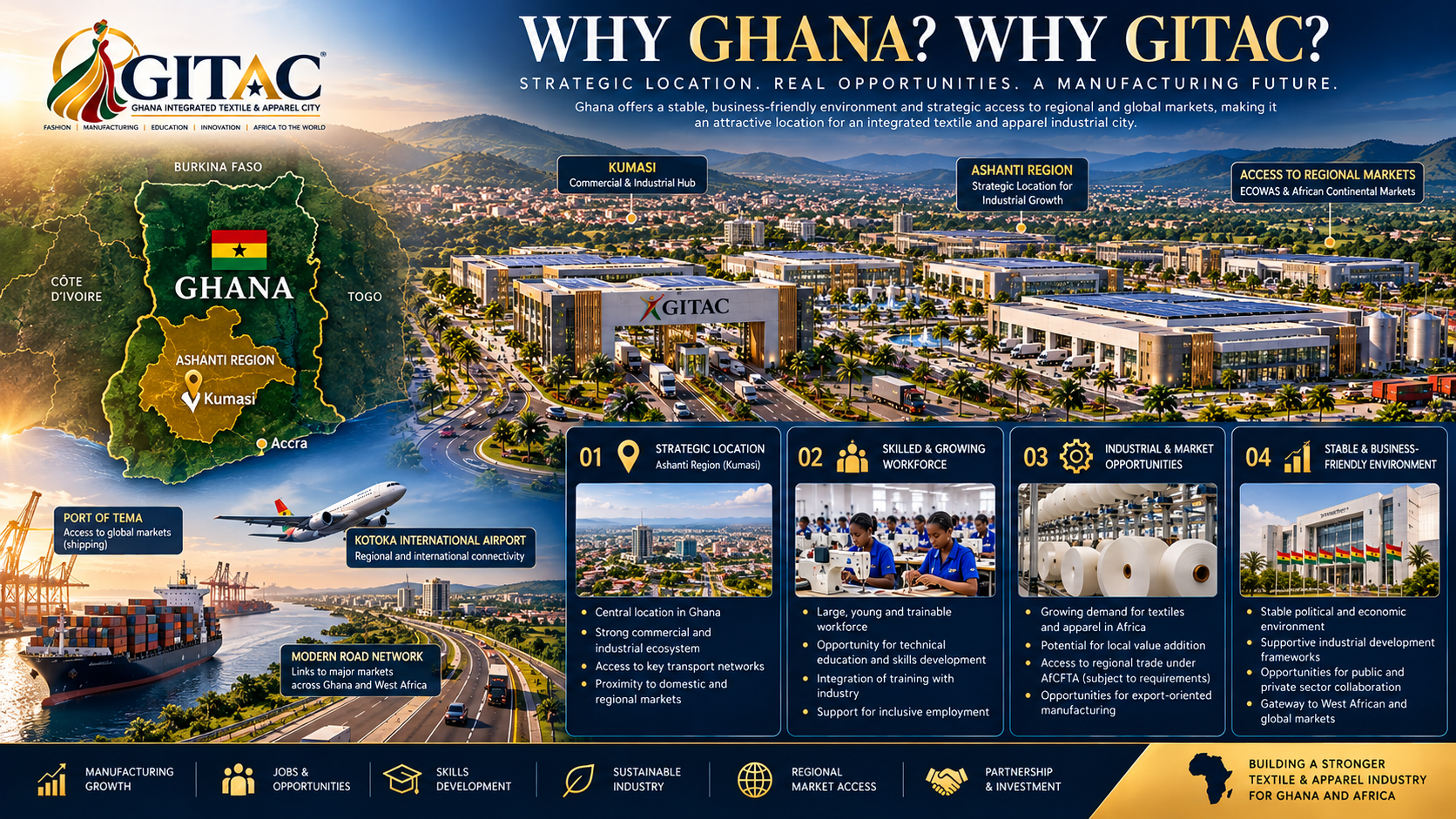
Ghana offers opportunities for the development of textile and apparel manufacturing through its domestic market, regional trade relationships, entrepreneurial ecosystem and potential for industrial skills development.
GITAC is being conceptualized for Ghana's Ashanti Region, with Kumasi identified as a preferred industrial location for further assessment.
The project aims to build on the region's commercial activity and workforce potential by developing a coordinated industrial ecosystem that integrates manufacturing facilities, technical training, logistics and supporting infrastructure.
Through strategic partnerships with established manufacturers, technology providers and investors, GITAC seeks to explore commercially sustainable opportunities for local value addition, job creation and participation in regional and international supply chains.
Investment & Strategic Partnerships
Partner in Building Ghana's Textile & Apparel Future
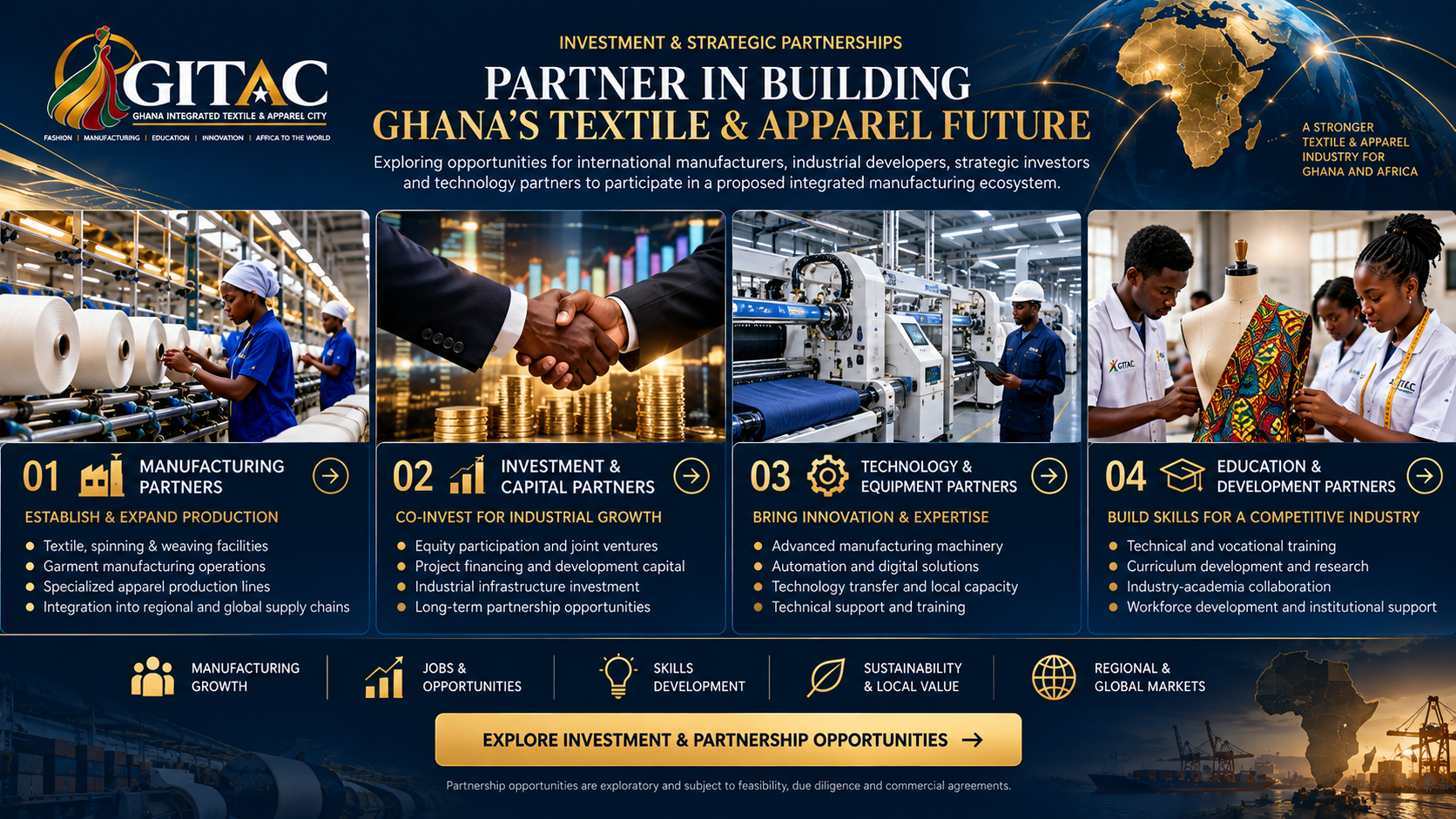
Ghana Integrated Textile & Apparel City (GITAC) invites preliminary engagement with established manufacturers, industrial developers, investors, technology providers, educational institutions and development partners interested in exploring participation in Ghana's proposed integrated textile-to-fashion industrial ecosystem.
Our partnership approach is intended to connect international industrial expertise and investment capital with opportunities for local manufacturing, technology transfer, workforce development and long-term industrial growth.
Manufacturing Partners
Explore opportunities to establish or operate textile, garment and related manufacturing facilities.
Investment & Capital Partners
Explore potential investment, project financing, industrial development and joint venture structures.
Technology & Equipment Partners
Explore opportunities to contribute advanced manufacturing equipment, industrial automation, technical systems and specialist expertise.
Education & Development Partners
Explore collaboration in technical training, workforce development, research and institutional partnerships.
GITAC welcomes expressions of interest from organizations seeking to assess potential commercial or strategic participation in the proposed development.
All opportunities remain subject to project feasibility, due diligence, financing and mutually agreed commercial arrangements.
The Future of African Manufacturing Begins with Collaboration
GITAC is advancing a vision for an integrated textile and apparel industrial ecosystem that connects manufacturing expertise, investment, innovation and workforce development in Ghana.
We welcome preliminary discussions with manufacturers, investors, technology providers and institutions interested in exploring opportunities to contribute to this proposed development.
GITAC — Fashion | Manufacturing | Education | Innovation | Africa to the World
Proposed Development — Not Yet Operational