

Project Development
From Industrial Vision to Manufacturing Reality
Ghana Integrated Textile & Apparel City (GITAC) is a proposed integrated industrial development designed to establish a comprehensive textile-to-fashion manufacturing ecosystem in Ghana.
The project is being structured around a phased development strategy that aims to attract established international manufacturers, strategic investors, technology providers, industrial developers, and educational partners.
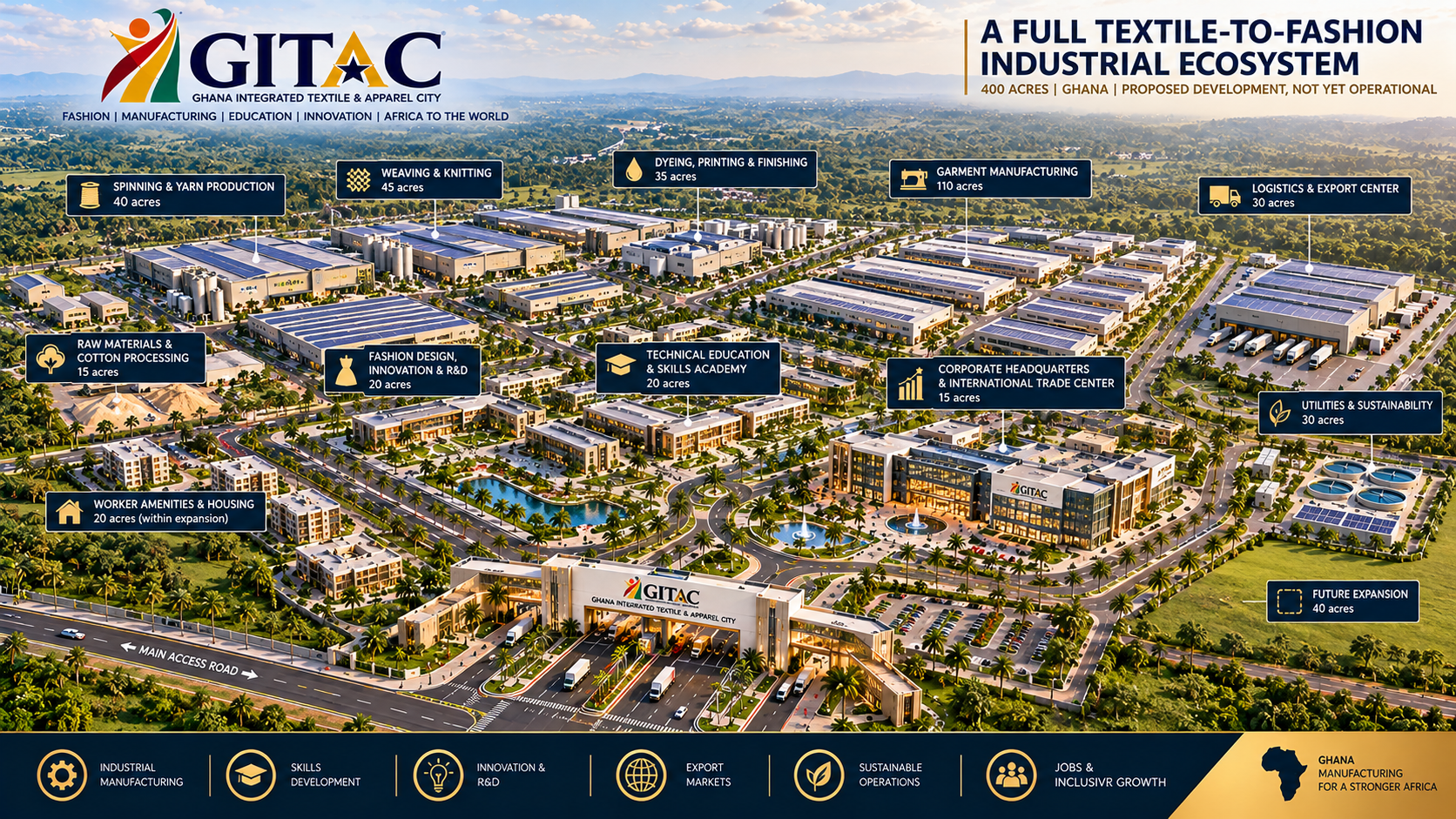
GITAC's preliminary development concept considers approximately 400 acres (162 hectares) for textile production, garment manufacturing, fashion innovation, technical education, logistics, industrial utilities, and supporting infrastructure.
The proposed land requirement, development phases, investment structure, and infrastructure specifications remain subject to feasibility studies, site selection, environmental assessments, and detailed master planning.
GITAC intends to prioritize commercially viable manufacturing partnerships and progressively develop industrial infrastructure in response to confirmed demand and available financing.
GITAC Proposed Industrial City — Preliminary 400-Acre Development Concept. Illustrative visualization; not yet operational.
Our Phased Development Strategy
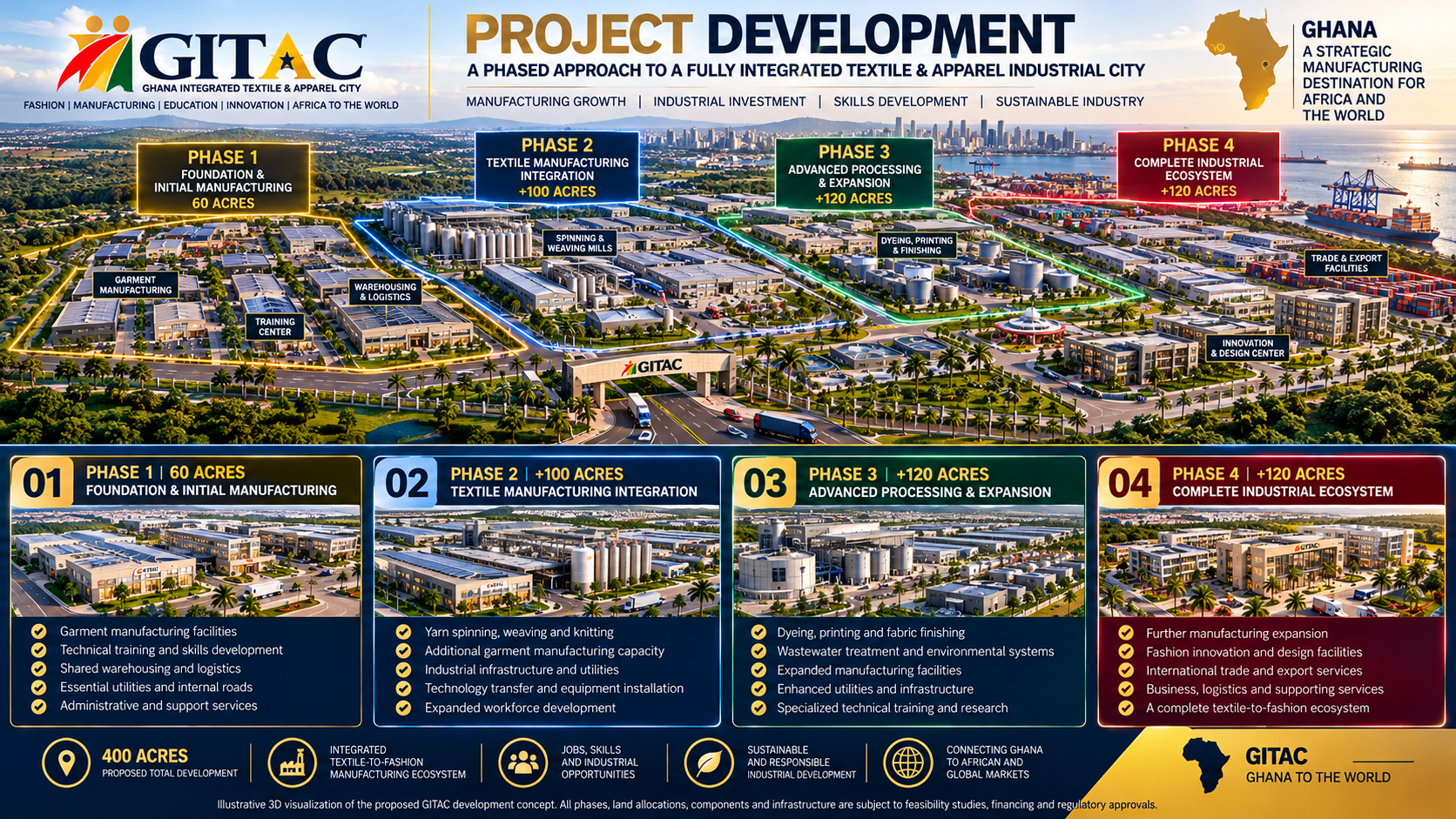
GITAC proposes a structured, four-phase development approach designed to progressively establish a fully integrated textile and apparel industrial ecosystem in Ghana.
Phase 1 — Foundation & Initial Manufacturing (60 Acres)
The first phase is envisioned to establish the initial industrial infrastructure and operational foundation of GITAC.
Priority components include garment manufacturing facilities, technical training workshops, shared warehousing, internal access roads, administrative services, and essential industrial utilities.
Phase 2 — Textile Manufacturing Integration (Additional 100 Acres)
The second phase aims to introduce upstream textile manufacturing capabilities, including yarn spinning, weaving, knitting, and expanded garment production.
This phase will seek to attract experienced textile manufacturers and technology providers capable of supporting industrial investment, skills development, and technology transfer.
Phase 3 — Advanced Textile Processing & Industrial Expansion (Additional 120 Acres)
The third phase is intended to develop advanced textile processing capabilities, including dyeing, printing, fabric finishing, and associated environmental infrastructure.
Implementation will depend on adequate water and energy infrastructure, environmental approvals, wastewater treatment capacity, and confirmed commercial demand.
Phase 4 — Complete Industrial Ecosystem & Future Growth (Additional 120 Acres)
The final proposed phase will focus on further industrial expansion, innovation, international trade facilities, additional manufacturing capacity, and supporting infrastructure.
This phase aims to consolidate GITAC as a comprehensive textile-to-fashion manufacturing destination serving Ghana, regional African markets, and international supply chains.
Development Status
The proposed 400-acre development concept and four-phase implementation strategy are preliminary planning assumptions. Actual development will depend on feasibility studies, site selection, financing, regulatory approvals, and confirmed manufacturing partnerships.
GITAC Four-Phase Development Roadmap
Project Readiness & Development Milestones
Building the Foundations for Industrial Investment
Ghana Integrated Textile & Apparel City (GITAC) is currently being developed as a proposed integrated textile and apparel manufacturing initiative.
Our development approach emphasizes structured project preparation, commercial validation, responsible infrastructure planning, and strategic engagement with manufacturers, investors, and development partners.
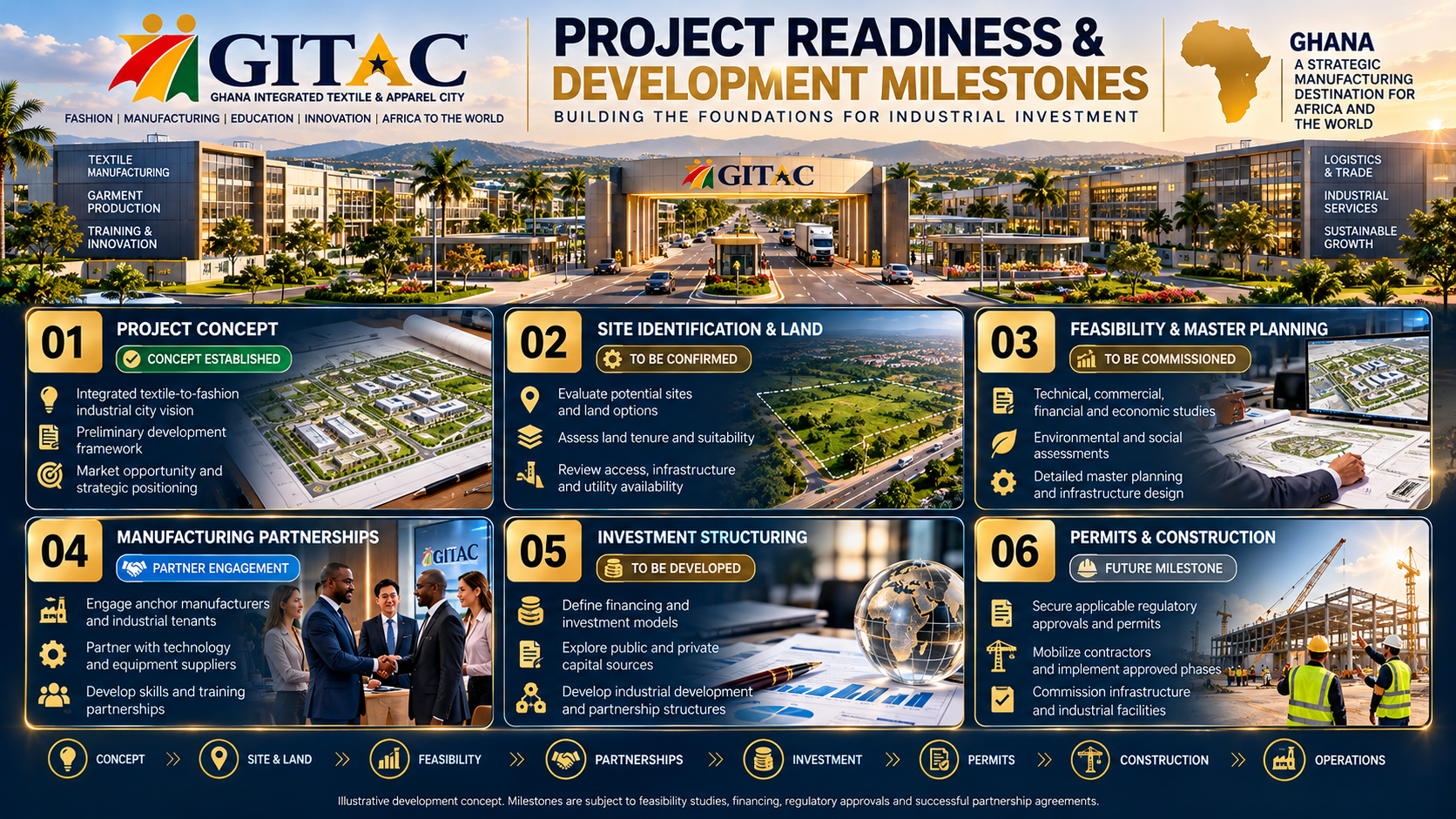
The following milestones outline the principal activities required to advance GITAC toward investment readiness and implementation.
Project Readiness & Development Milestones
Our Immediate Development Priorities
GITAC's initial priorities are to refine the industrial development concept, assess suitable locations, engage prospective anchor manufacturers, and establish a credible pathway toward feasibility studies and investment structuring.
The project intends to explore commercial models in which experienced manufacturers, industrial developers, and investors may participate in the development or operation of specific facilities and industrial components.
Any proposed investment arrangement will be subject to commercial negotiations, due diligence, applicable regulations, and mutually agreed contractual terms.
GITAC welcomes preliminary discussions with organizations interested in contributing manufacturing expertise, technology, industrial development capabilities, or investment capital.
Participate in the Development of GITAC
Building Ghana's Textile & Apparel Future Through Strategic Partnerships
Ghana Integrated Textile & Apparel City (GITAC) is seeking preliminary engagement with established textile and apparel manufacturers, industrial developers, strategic investors, technology providers, and development institutions interested in exploring opportunities within Ghana's emerging manufacturing ecosystem.
GITAC's proposed development model is designed to accommodate different forms of commercial participation, including:
Manufacturing Investment: Establishment and operation of garment, textile, and related production facilities.
Industrial Development: Participation in the financing, construction, or operation of industrial infrastructure and facilities.
Technology Partnerships: Supply of manufacturing equipment, technical expertise, automation, and production systems.
Education & Skills Development: Collaboration on vocational training, industrial skills, and workforce development.
Strategic Capital Partnerships: Exploration of equity investment, project financing, joint ventures, and other commercially negotiated structures.
Partnership arrangements will be assessed individually, subject to feasibility, due diligence, financing, and applicable regulatory requirements.
Let's Explore the Opportunity
Organizations interested in participating in GITAC's proposed development are invited to submit a Partnership Expression of Interest.
GITAC — Connecting Global Manufacturing Expertise with Ghana's Industrial Potential.